

5 Acres for Sale in Arlington, WA with Whitehorse Mountain Views
5 Acres for Sale in
Arlington, WA with
Whitehorse Mountain Views
Hold It. Camp It. Build It.
5-acre raw land in Arlington, WA with Whitehorse Mountain views, recreational use today,
future custom homesite potential, nearby utilities, cleared driveway/potential homesite,
and proximity to Cascade recreation.
$189,000





|
|
why this 5 Acres of Mountain Views in Arlington is rare
why this 5 Acres of Mountain Views in Arlington is rare
This 5-acre Arlington parcel offers something that is getting harder to find: raw land with a front-row view of Whitehorse Mountain, sunrise exposure, and a location near the gateway to Cascade recreation. In a growing Snohomish County market, land like this gives buyers options.
You can enjoy it recreationally now, while exploring the path toward a future custom homesite. Properties with view potential, usable access, nearby utilities, and long-term flexibility tend to get attention for a reason. Whether someone is thinking lifestyle, future build, land hold, or a smart addition to their real estate portfolio, this parcel offers the kind of opportunity buyers like to secure before the next person sees what they see.








This kind of property doesn't stay on the market
This kind of property doesn't stay on the market
Properties with view potential, usable access, nearby utilities, and long-term flexibility tend to get attention for a reason. For buyers thinking beyond today, this parcel offers more than a pretty setting — it offers options. Whether used recreationally now, held for future value, or explored as a future homesite, this is the kind of land opportunity smart buyers recognize before it is fully improved.
Whats Nearby
OUTDOOR: Whitehorse Trail (5 min), Stillaguamish River (10 min), Squire Creek Park (20 min), Mt. Pilchuck (50 min), Stevens Pass (1 hr 45 min)
CITY: Arlington downtown (20 min), Cascade Valley Hospital (20 min), Costco / Smokey Point (30 min), Boeing / Paine Field (45 min), Seattle (1.5 hrs)
PROPERTY SNAPSHOT
PROPERTY SNAPSHOT
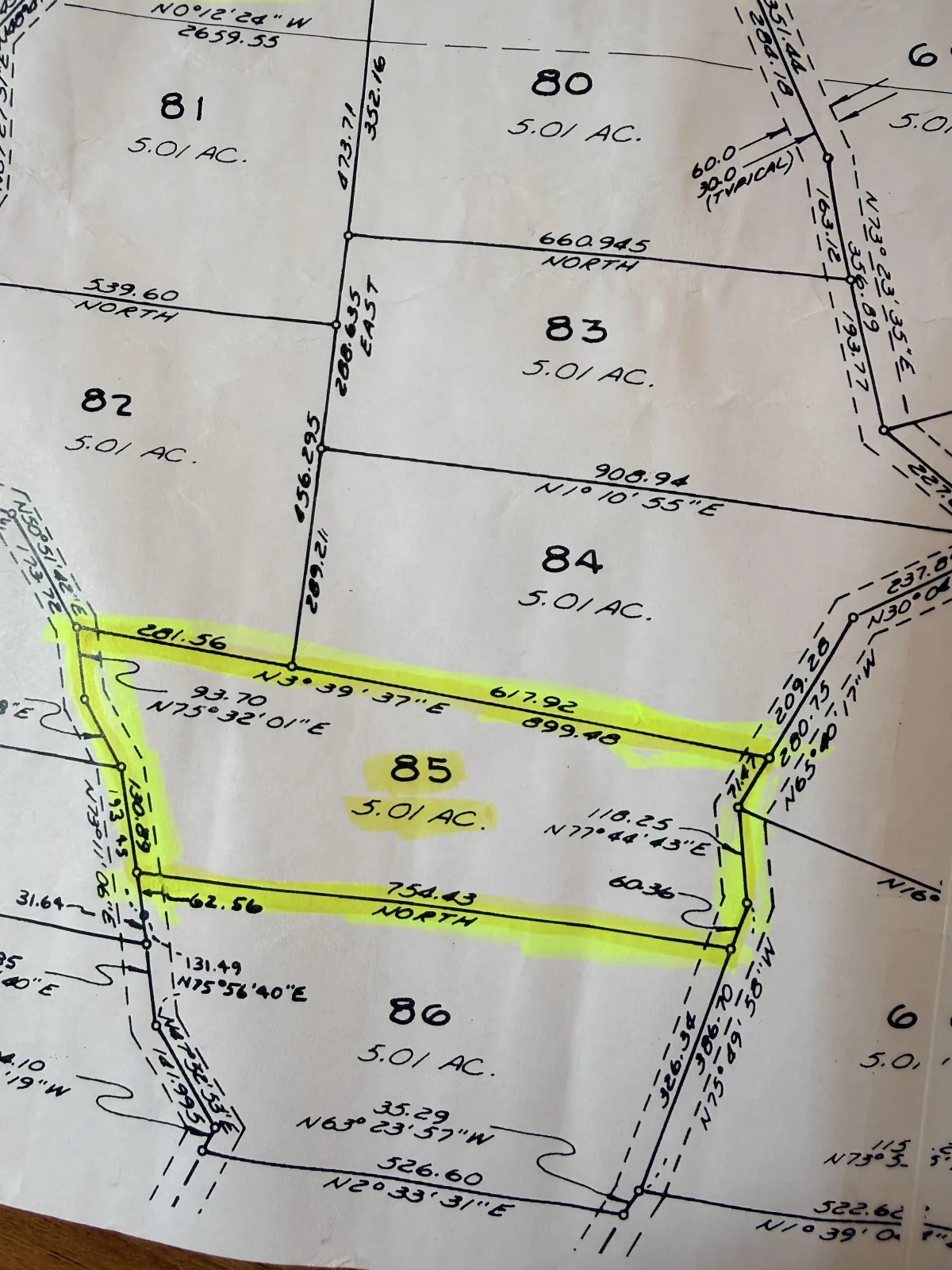
Parcel #32060300302400
MLS # 2535892
Parcel #32060300302400
Ziply fiber & underground electric at road
Driveway & Potential Home site Cleared
5 Acres of Land
*Buyer to verify well/septic feasibility, zoning, and easements with Snohomish County PDS.
Parcel #32060300302400
MLS # 2535892
Parcel #32060300302400
Zipley fiber & underground electric at road
Driveway & Potential Home site Cleared
5 Acres of Land
*Buyer to verify well/septic feasibility, zoning, and easements with Snohomish County PDS.
Local market update
National Market Update
Buyer Tips
Explore The Communities

CLICK TO ACCESS:
The Buyer's Advantage : Current Trends, Inisights & What to Expect in 2026

CLICK TO ACCESS:
The Complete Guide to Buying A Home

CLICK TO ACCESS:
Lender Questionnaire Checklist

Snohomish County STATS & LOCAL INFO
Click Here for the Census Data.
Click Here for the Snohomish County, WA Report Card from Niche.
Community Videos
Top 5 Things To Do In Brentwood
Top Tacos in Brentwood
41 Sand Creek Rd C, Brentwood
335 Oak St, Brentwood
3 best sandwich Shops
Best Burrito
Best Hotdogs in Brentwood
MJ's Cafe in brentwood
Visit our blogs for more real estate tips, home tips, and local information!
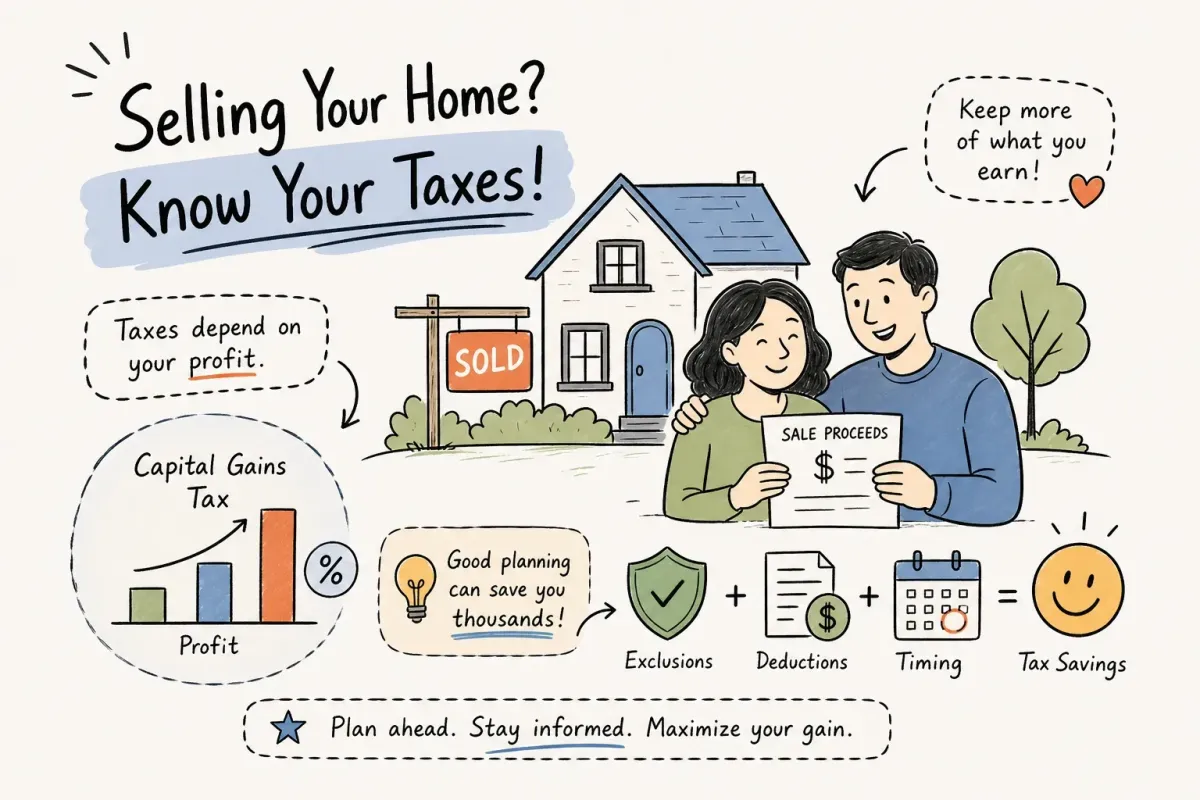
Taxes When Selling Your Home: What You Need to Know
Taxes when selling your home can be surprisingly manageable, if you understand the rules before you reach the closing table. Many sellers who meet the IRS requirements walk away owing zero in federal tax, but that outcome isn't automatic. The gap between what you made on paper and what the IRS considers taxable gain can be enormous, and the timing of your sale matters far more than most sellers ever realize.
For sellers in Washington state, the picture gets even better. Washington has no personal income tax and specifically exempts real estate from its capital gains excise tax law. That means your only real tax exposure is at the federal level, which already puts you ahead of sellers in most other states. Still, federal rules are detailed enough that a little preparation goes a long way. Working with a local agent like Annette at NewDay Real Estate Solutions before your listing goes live gives you the chance to structure the timing of your move in a way that protects your net proceeds, not just your sale price.
This guide walks you through every layer of home sale taxation: how gains are calculated, what exclusions apply, what Washington sellers specifically owe, how to report the sale correctly, and when you genuinely need a tax professional in your corner.
Taxes when selling your home: how federal capital gains tax actually works
When you sell a home for more than you paid, the profit is called a capital gain. Whether the IRS taxes that gain depends on three things: how long you owned the property, how you used it, and how much you made. Getting clear on this framework makes everything else in this guide easier to apply.
Short-term vs. long-term rates
The one-year threshold is the first thing to understand. If you sell a home you've owned for less than 12 months, any gain is taxed as ordinary income, which can push you into a significantly higher rate than long-term capital gains. Sellers who have owned for more than a year qualify for long-term rates of 0%, 15%, or 20%, depending on taxable income and filing status.
For 2026, the IRS thresholds break down like this. Single filers pay 0% on long-term gains if taxable income is $49,450 or below, 15% from $49,451 to $545,500, and 20% above that. Married couples filing jointly pay 0% up to $98,900, 15% from $98,901 to $613,700, and 20% above $613,700. These thresholds apply to your total taxable income including the gain, not the gain alone.
How your filing status and income affect what you owe
Your full financial picture determines your effective rate, not just the gain from the home. A single filer with $80,000 in taxable income pays 15% on long-term capital gains, while a single filer at $40,000 may pay 0% on the same gain. For married couples, the 0% bracket extends much further, a meaningful advantage when coordinating sale timing with other income.
The practical takeaway: reducing your other taxable income in the year of the sale, through retirement contributions, deductions, or other planning, can push the gain into a lower rate bracket or even eliminate the tax entirely. That kind of planning requires looking at your whole return, not just the real estate transaction.
The primary residence exclusion: your biggest tax break
This is the rule that eliminates most sellers' federal tax liability altogether. The IRS allows homeowners to exclude up to $250,000 of gain from taxable income if they're single, or up to $500,000 for married couples filing jointly, as long as they meet specific ownership and use requirements. For many typical primary-residence sellers in Snohomish County, this exclusion covers the entire gain.
Meeting the 2-of-5-year ownership and use tests
To qualify for the full exclusion, you must satisfy two tests during the five-year period ending on your sale date. The ownership test requires that you owned the home for at least 24 months. The use test requires that you lived in it as your primary residence for at least 24 months. For a joint return, only one spouse needs to meet the ownership test, but both must meet the use test.
The two periods don't need to be continuous or even overlap. You could have owned the home, rented it out, moved back in, and still qualify, as long as the totals add up within the five-year window. One hard limit: if you excluded gain from a different home sale within the two years before this sale, you cannot claim the exclusion again. The IRS enforces a once-every-two-years rule.
Partial exclusion when life forces an early sale
If you don't meet the full two-year requirement because of a qualifying reason, the IRS doesn't cut you off entirely. Qualifying circumstances include job relocations where the new workplace is at least 50 miles farther from the home than the old one, health-related moves, death of a household member, divorce, and natural disasters, among other unforeseen events.
The formula is straightforward: multiply the maximum exclusion by the fraction of the 730-day requirement you actually met. If you're single and lived in the home for 365 days before a qualifying job relocation forced a sale, your partial exclusion is $250,000 multiplied by 365/730, or $125,000. That's still a significant tax shelter on a gain that would otherwise be fully taxable.
Calculating your taxable gain the right way
Even when the exclusion covers your full gain, knowing the actual number matters. Sellers who don't calculate their adjusted basis accurately sometimes underestimate their gain and get surprised at tax time, or overestimate it and leave money on the table. The math isn't complicated, but it requires documentation.
Building your adjusted basis step by step
Your adjusted basis starts with what you paid for the home and increases with every documented capital improvement you made during ownership. A kitchen remodel, roof replacement, new HVAC system, an addition, or a significant landscaping project all add to your basis. Routine repairs and maintenance don't count. Your basis then decreases for certain events like casualty loss deductions or prior depreciation.
Gain is calculated by subtracting your adjusted basis from your amount realized. The amount realized is your sale price minus allowable selling expenses: commissions, transfer taxes, legal fees tied to the sale, and similar closing costs. Here's a concrete example. If you paid $300,000 for a home and added $40,000 in documented improvements, your adjusted basis is $340,000. If you sell for $380,000 and pay $20,000 in selling costs, your amount realized is $360,000. Your gain is $20,000, well within the exclusion limits for either a single filer or a couple.
Homes with prior rental or business use
Sellers who rented the home or used part of it as a home office face additional complexity. Depreciation you claimed during the rental period cannot be excluded under the primary residence exclusion. That amount is treated as unrecaptured Section 1250 gain and taxed at a federal maximum rate of 25% (per IRS Publication 523 and Section 1250 guidance). If the rental was a separate unit on the property rather than space inside the home, you must calculate gain separately for the residential and rental portions.
The key action item for anyone who has ever rented their home or claimed a home office deduction is to track every dollar of depreciation taken. It reduces your adjusted basis on the way in and gets recaptured on the way out. Sellers in this situation should work with a CPA, not just filing software, because the calculations require detailed records and specific IRS worksheets.
What Washington state sellers actually owe
Washington's tax environment for home sellers is genuinely favorable, and many sellers in Snohomish County don't fully appreciate the advantage they hold over sellers in California, Oregon, or New York. Understanding both the income tax picture and the transfer tax picture gives you a complete view of your closing economics.
Washington's income tax advantage and real estate exemption
Washington has no personal income tax, which means there is no state-level tax on capital gains from home sales at the individual income level. Washington did enact a capital gains excise tax that took effect in 2023, but real estate is explicitly exempt from that law. The Department of Revenue has stated in its published guidance that the tax "does not apply to the sale or exchange of real estate" regardless of how long you owned it, whether you lived in it, or what type of property it is.
For Snohomish County sellers, this means your only capital gains exposure is at the federal level. If you qualify for the primary residence exclusion, you may owe nothing at all. By comparison, some states, California among them, impose state income tax rates that can reach double digits on the same gain, making Washington's position a concrete financial advantage.
Taxes when selling your home in Washington: what REET means for your net proceeds
Washington's Real Estate Excise Tax (REET) is not an income or capital gains tax. It's a transfer tax paid by the seller at closing, calculated on the sale price using a graduated rate schedule. The current brackets are:
1.10% on the first $525,000
1.28% on the portion from $525,000.01 to $1,525,000
2.75% on the portion from $1,525,000.01 to $3,025,000
3.00% above $3,025,000
REET reduces your net proceeds but also reduces your amount realized for IRS gain calculation purposes, since it qualifies as a selling expense. On a $600,000 sale, for example, your REET would be $6,735, calculated as 1.10% on the first $525,000 ($5,775) plus 1.28% on the remaining $75,000 ($960). That's real money, and it's worth factoring into your pricing strategy before you list.
Timelines that directly affect your tax bill
The decisions you make months or even years before listing can determine whether you qualify for the full exclusion, a partial exclusion, or owe tax on the full gain. Timing isn't just about reading the market, it's about protecting what you've built.
The two-year clock and why your listing date matters
The math here is worth running carefully. If you're 18 months into living in your home and thinking about selling, waiting six more months before closing can mean the difference between a $0 tax bill and a five-figure tax bill. The two-year use test is measured against your closing date, not your listing date. Sellers who plan to move need to count backward from when they expect to close, account for the typical 30-to-45-day escrow period, and confirm the math works before signing a listing agreement.
Sellers who are borderline on the two-year test should discuss the timing with both a tax professional and their real estate agent before committing to a launch date. A few extra weeks on the market calendar could save tens of thousands of dollars in federal tax.
Why working with a local agent before you list changes the math
A knowledgeable local agent does more than help you set a listing price. They help you structure the entire timeline around your specific situation, including the tax implications of when you close. Annette at NewDay Real Estate Solutions works with sellers in Snohomish County early in the process precisely because decisions about when to list, how to price, and what improvements to document can affect how much you keep after taxes and closing costs.
That early conversation also covers practical details most sellers overlook, gathering documentation for capital improvements, understanding the REET impact at different price points, and confirming that the primary residence exclusion applies cleanly. In our experience, sellers who start the planning process early, before they're ready to list rather than the week they decide to put up a sign, consistently keep more from their sale than those who don't.
When and how to report the sale to the IRS
Many sellers receive Form 1099-S at closing and panic, assuming they owe tax. Others assume they never need to report anything because their gain is excluded. Both reactions are often wrong. The reporting rules are precise and worth understanding before your closing date.
When you can skip reporting entirely
If your gain is fully excludable and you do not receive Form 1099-S, you generally don't need to report the sale on your federal return at all (see IRS Publication 523 and Treas. Reg. § 1.6045-4). The closing agent is not required to issue a 1099-S for a principal residence sale of $250,000 or less (or $500,000 for joint filers where the full gain is excludable) when you provide written certification that the home was your primary residence and the full gain qualifies for exclusion. This is a useful and under-known rule that simplifies filing for most routine home sales.
Form 8949 and Schedule D: what gets filed and when
If you do receive a Form 1099-S, you must report the transaction on Form 8949, even if your gain is fully excluded and you owe nothing. The IRS matching system will flag unreported 1099-S income. You report the sale, claim the exclusion, and show a zero taxable gain. If your gain exceeds the exclusion limit, that excess is reported on Form 8949 and carried to Schedule D on your Form 1040.
Sellers with rental history, home office depreciation, or gains that exceed the exclusion limits should work with a CPA rather than relying on tax software alone. The worksheets required for unrecaptured Section 1250 gain and partial exclusion calculations are complex enough that errors are common, and the stakes are high.
For a typical primary residence sale with no rental history and a gain well within the exclusion limits, the filing is usually simple. Most Snohomish County sellers fall into that category, but only if they've managed the two-year clock correctly.
Plan early and keep more of what you earned
Most Washington home sellers qualify for the full federal primary residence exclusion and owe nothing on the gain from their home. Getting there requires knowing the two-year ownership and use test, tracking your adjusted basis accurately through capital improvements and selling costs, and understanding that Washington's REET will reduce your net proceeds even when your capital gains tax bill is zero.
The sellers who keep the most from their sale are the ones who start the planning conversation early. That means connecting with a tax professional if your situation involves rental history, business use, or gains above the exclusion threshold. It also means talking with your real estate agent before you're ready to list, not after. Preparation pays off when it comes to home sale taxes. A little time spent on the numbers before you go to market can protect far more than any negotiation tactic at the closing table.
If you're thinking about selling a home in Snohomish County, Everett, Lake Stevens, or the surrounding area, reach out to Annette at NewDay Real Estate Solutions for a free consultation. That conversation is worth having well before your listing goes live.
Clink the link to book a consultation https://calendly.com/newdayres/new-day-consultation

Annette Stoddard | Realtor & Broker
DRE # 22016950
Meet Annette
Annette Stoddard is the Designated Broker at New Day Real Estate Solutions. She has been a resident and active participant in Snohomish County since 1986, building a highly successful career in the residential real estate market. Committed to staying ahead in this dynamic industry, Annette has completed numerous hours of continuing education and conducts extensive market research.
Understanding that buying or selling a home is an intensely personal process filled with crucial decisions, Annette takes the time to listen carefully to her clients’ preferences and desires. She leverages her extensive knowledge to guide them seamlessly through every step of the transaction, from start to finish.
Annette’s primary goal is to establish lifelong relationships with her clients. She believes this can only be achieved through earning their confidence, loyalty, and referrals. As a true professional, she is dedicated to providing the highest level of integrity and transparency in her service. Annette takes this commitment very seriously, viewing it as her core promise to every client.
WELCOME TO THE VIRTUAL HOME BUYER SEMINAR LIBRARY
Enjoy the latest & most up-to-date marketing & sales tactics to help you purchase a NEW home.
Thinking About Buying?
Are you thinking about buying a home but you don't know where to start?
Learn to take advantage of Tax Saving opportunities instead of throwing your money away
Walk through the important aspects of purchasing a home
What to Expect When Buying a Home
Purchasing a home is most likely going to be one of the largest investments you will make in your lifetime.
We have helped hundreds of clients in the past and we can help you too
My team and I are free! The seller pays for our fees and they have an agent who has their best interest at heart. We are here to have yours
Home Buying Process -
First Step
The first step when looking to buy a home is getting qualified for a loan.
Before doing anything else you need to know what you can afford by getting qualified for a loan
Don’t go house hunting before going mortgage shopping
Pre-Approval vs
Pre-Qualification
Why you need an approval rather than just a pre-qualification.
Pre-Qualification is not a true approval but the initial step in a home loan process where you discuss your financial situation with a loan officer - nothing is verified
Pre- Approval is where the buyer provides the lender with the necessary documents to tell them what they are approved for, which loan option is the best for them and what the interest rate will be
10 Must Not’s When Buying a Home
Once you find your dream home, we need to make sure you get to move into it.
Don’t change jobs; becoming self employed or quit current job
Don’t buy a vehicles
Don’t use any charged cards or let your accounts fall behind
Don’t spend money you saved for closing
Don’t omit any debt or liabilities from your loan application
What are the Pros and Cons of Purchasing a Home?
Whether you’ve never owned a home before or it’s been a while since you’ve purchased, let's talk about the pros and cons.
Pro: Your wealth can increase as you build equity in your home through 2023 averaging about 3%
Con: Maintenance costs; work and money to keep a home in good condition
How Much Money Do I Need To Purchase a New Home?
Most people are afraid that it will cost them thousands and thousands of dollars to purchase a home in Brentwood.
There are various loans and grants to qualify to purchase a home
3 Tips To Get Your Offer Accepted
Are you competing with other buyers on your dream home or do you want to make sure you’ve got the best chance of getting your offer accepted?
Make sure you offered a competitive price on a home
Put down a larger earnest money deposit
Let the seller know that you have not written offers on any other properties
Offer Has Been Accepted, What’s Next?
Once your offer has been accepted, it's time to open up escrow.
It's time to get inspections done on the home, review disclosures, secure the loan, and get the appraisal done
WANT TO GET A FREE CUSTOM MARKET PROPOSAL?
Go to the next page to request a custom market proposal for your specific home
MEET THE TEAM
Here's your team that will help you throughout the
entire selling & buying process

Kenneth Gotengco
Marketing Specialist & Admin

Annette Stoddard | Real Estate Broker
DRE #02195224

Karlie Thomsen
Marketing & Design
Krista Mashore | Realtor & Broker
DRE#01513330
Meet Krista Mashore
Krista Mashore has been recognized by Wall Street Journal in The Top 100 Real Estate Agents in the U.S. and was in the top 1% of Realtors Nationwide for 19 years selling over 2,300 homes as a solo agent while in production.
Krista is the author of six best selling books focusing on Digital Marketing and Real Estate
. She was named Yahoo Finance’s number 1 digital marketer to watch in 2021! She is in the top 1% coaches nationwide focusing on Sales and Marketing. According to Success Magazine Krista was one the 125 most impactful leaders in 2022 alongside Tony Robbins. She has been featured in Forbes, Inman News, The Wall Street Journal, Fox and more!
Through her expertise in digital marketing and sales she has brought her Coaching business from Zero to 59 Million in 6 Years.
WHAT PEOPLE ARE SAYING ABOUT
NEWDAY REAL ESTATE SOLUTIONS

"Above and beyond the call of duty! I was relocated and all I had to do was call and Annette took care of it. Thank you very much for all the expertise and all the help you provided in selling my house."
— D. Mahoney
"We could not have asked for a more professional, courteous, hard-working agent than Annette. She worked against a lot of odds and was always honest and helpful. I love my house!!"
- C. Kummerfeldt
"It was very personal and pleasant. Annette just about drove the wheels off her poor car showing me different properties. I can't THANK her enough! Very helpful with all the paper work as well. I couldn't have done it without her!"
- S. Bockelie.
Want to be sure you don't miss out on any local tips & local real estate market updates?
Have them delivered to your inbox.
Subscribe to the monthly digital newsletter below!
| Copyright © 2026 | All Rights Reserved
Privacy Policy | Terms & Conditions
WHAT PEOPLE ARE SAYING
Listen to what some of our past & current clients are saying
"We're so happy we attended the buyer seminar. This process really works and it works every single time..."
- Mary & Troy
"Homes By Krista Is The Way To Go For A Successful Home Sale."
"Our first ever home sale. Krista and her team made the experience so smooth. From our first meeting to the last it was all about us and how they made it an enjoyable experience. They were all unbelievably attentive and responsive to our needs.
- Jerry & Liqin A.
"The Strategy, Marketing And Pricing On The House Were Spot On."
"My father in law passed and we needed to sell his house. We met with three different agents and we quickly decided to go with Krista. Krista and her team are very knowledgeable, energetic and at the top of their game. Everything was spot on."
- Shaun & Heather B.
"We Followed Her Advice And We Got The House For The Price We Wanted."
"Krista and her team were excellent. We bought a home while on vacation. We relied on her staff to not only view the house but she positioned us so well, that we followed her advice and we got the house for the price we wanted. Thank you!
- Michael & Laura N.